An exclusive interview with Chairman Zhang Chengkang of SIE: How does data drive the change of manufacturing industry in the process of digital acceleration?
Recently, Zhang Chengkang, chairman of SIE Information, visited a newly built PCB factory in Zhuhai. The same capacity scale, which originally required 8000 employees, now only requires 1/3. The transformation behind it is the improvement of automation and digitization, which greatly reduces the dependence of production on manpower.
These changes are also reflected in the latest financial report. According to the financial report released by SIE, the revenue in the first half of the year was 867 million yuan, up 61.57% year on year; The net profit attributable to the parent company was 55.1424 million yuan, a year-on-year increase of 19.36%.
As the head of an industrial management software enterprise, Zhang Chengkang noticed that after years of information construction, the company has accumulated a large amount of data and realized the importance of mining and analyzing value from data, gradually transitioning from a process driven to a data-driven digital transformation system. This is an important change in digital transformation.
Data drives transparent decision-making in enterprises
Under the epidemic, the circulation of industrial and supply chains has been hindered, but it has also accelerated the drive for digital transformation of enterprises.
Many factories used to not need to be connected to the outside world, but with the expansion of business or the construction of multiple factories, data needs to flow and be shared between different systems and factories, which has given rise to the demand for cloud computing in enterprises, further amplifying the value of data, "said Zhang Chengkang.
He gave an example that in the past, few products could be traced back to which supplier like the automotive industry, but now, with the help of digitization, even the four wheels on a stool can know their place of origin, time of manufacture, and batch.
Digitization can also connect products with people, and whoever installed a product can be traced back, "Zhang Chengkang said as he picked up a bottle of water on his desk." The barcode on the bottled water can only be read by the manufacturing enterprise, but more information will be loaded in the future
In the future, all materials in the factory will be interconnected using a unified digital "language". Zhang Chengkang said that the economic crisis of enterprises often arises from inventory, and with the help of digitization, manufacturers can know the supply chain status of suppliers through data connections between enterprises and processes, making information more transparent and reducing waste and improving efficiency.
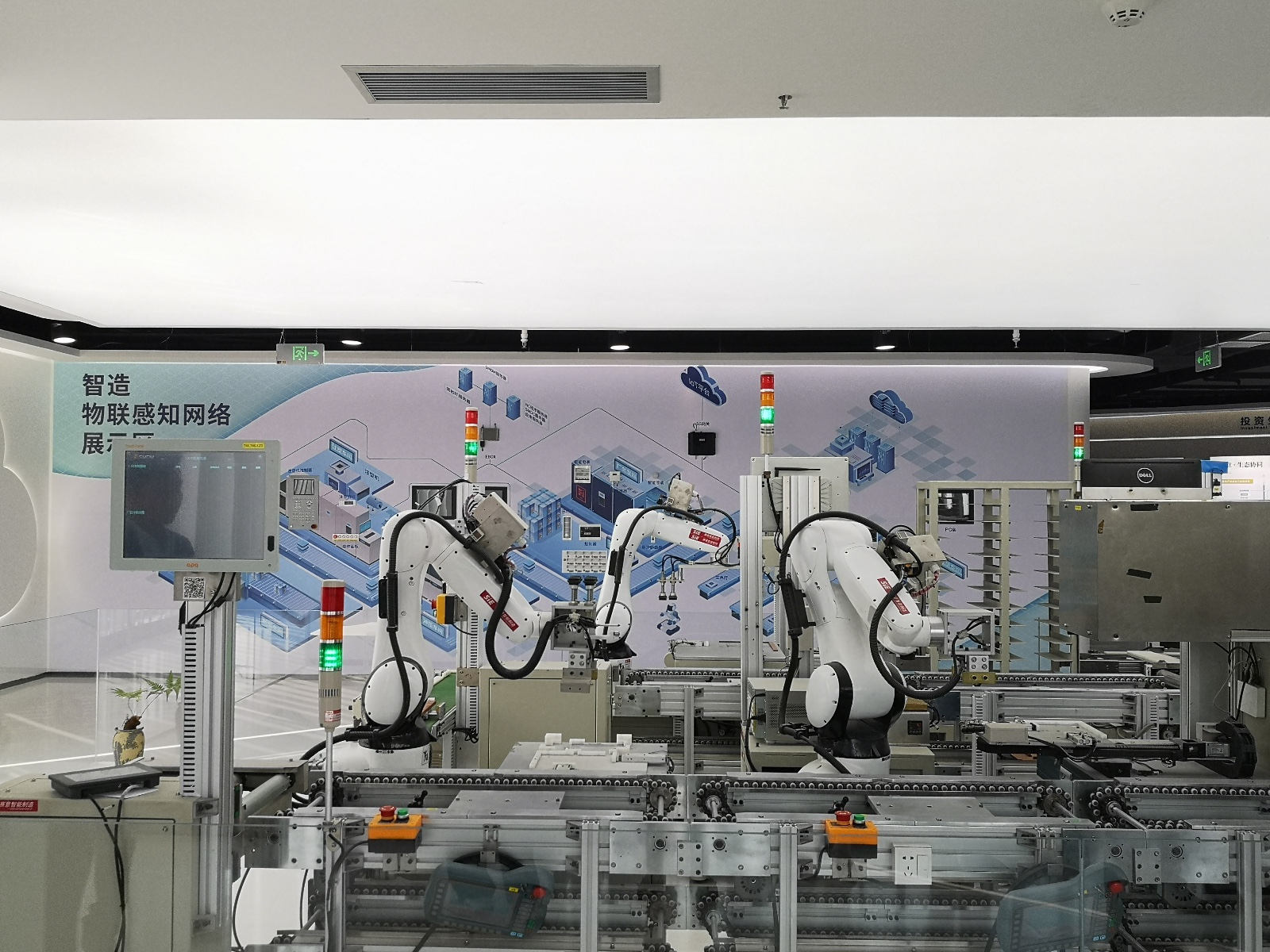
In the revenue of SIE Information, the proportion of revenue brought by the digitalization of new factories is growing. Zhang Chengkang said that in the past, all that was needed was to put up a recruitment sign at the entrance of the factory and wait for job seekers to come to their door, but now it is necessary to take the initiative to go to the train station. Despite this, it is hard to imagine that 8000 people can be recruited at once. "Nowadays, many new factories are basically equipped with digitalization and intelligence.
Explore new scenarios for digital consulting
With the gradual penetration of technologies such as 5G, AI, and the Internet of Things into the factory hinterland, Zhang Chengkang believes that data cleaning, screening, and governance are becoming increasingly important.
Many factories have digital screens that clearly display the data status of the factory, but data governance between data collection and application is becoming increasingly important. How to classify this data and how to apply it to different scenarios, "said Zhang Chengkang.
From how to utilize data to digital transformation, the confusion of small and medium-sized enterprises remains undiminished. In this regard, SIE Information has set up a company specializing in digital transformation consulting to provide professional digital transformation consulting services for customer enterprises.
Zhang Chengkang introduced that the goal of implementing ERP and other management systems in enterprises is to solve problems related to people, finance, and materials. Nowadays, with the advancement of technologies such as big data and AI, enterprises are moving from informatization to intelligence, and the demand for digital transformation is greatly increasing.
In the information age, the previous ERP system can solve specific problems, but in the digital age, a single point solution is no longer sufficient. Enterprises also focus on future development directions, just like human resources is not just about recruitment, but also related to the enterprise's human resources strategy. ”Zhang Chengkang said.
Compared with multinational consulting companies, a set of consulting plans are often tens of millions, which is difficult for small and medium-sized enterprises to bear. SIE, a manufacturer, can help customers combine consulting with practice, avoiding the separation of the two. At the same time, lightweight consulting reduces the consulting threshold for enterprises. In the future, we will also provide consulting services around industrial clusters to further reduce the threshold for digital transformation of small and medium-sized enterprises within the cluster.
At present, SIE Information helps customers from automobile, manufacturing, medical and high-tech industries to accelerate the completion of enterprise digital transformation projects through the digital transformation consulting business provided to customers.
Domestic industrial software shoulders the banner of 'independence'
From process driven to data-driven, the digital transformation of enterprises has also given rise to new opportunities for domestic software.
If machines and other hardware are the "torso" of the human body, then industrial software is the "brain" of the human body. Although the output value of industrial software is not large, it is the easiest to be squeezed "seven inches".
Extending the time, Zhang Chengkang discovered that the software industry has indeed ushered in an unprecedented opportunity. In the 1990s, the development of the automotive electronics and software industry was lukewarm. Taking cars as an example, almost all of them were mechanical structural components except for radios which had certain electronic properties.
Today, apart from the wheels, body frame, seats, and other components that are not electronic parts, many other main parts of the car are only composed of batteries, electronic components, and software, which are becoming increasingly sophisticated.
However, it is not easy to get a share of the expanding market. Zhang Chengkang mentioned that the overall revenue of domestic industrial software companies is not high, even some top companies have annual revenue of only a few hundred million yuan, while multinational companies in China often have revenue of over 1 billion yuan. "This is simply a PK between small ants and giants. One of the major characteristics of domestic industrial software companies is that they are cheap, while multinational companies only need to use the 'killer move' of price reduction, which has great destructive power.
With the opportunity of localization, industrial software companies have been listing on the Science and Technology Innovation Board and raising funds since the beginning of this year, which has given domestic industrial software more confidence in responding to competition.
It is worth mentioning that domestic leading enterprises are increasing their support for independent brands. Zhang Chengkang introduced that in the past, many large enterprises were "take it for yourself", using whoever's software was good. Even if the software of multinational enterprises was expensive, it didn't matter, but now they tend to lean towards domestic brands when purchasing.
Zhang Chengkang said that the changes in the external ecological environment, especially the pioneering use of leading companies such as Huawei, have provided a platform for a group of independent brand software enterprises.