Breakthrough in Industrial Software: Expected to Rise under the New Development Pattern
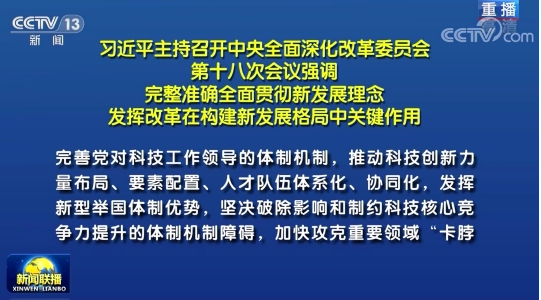
On February 19, 2021, the 18th meeting of the Central Committee for Deepening Reform emphasized the need to leverage the advantages of the new national system and accelerate the breakthrough of "bottleneck" technologies in important fields. Industrial software, which is related to independent and controllable industries, has become one of the key areas under the new development pattern.
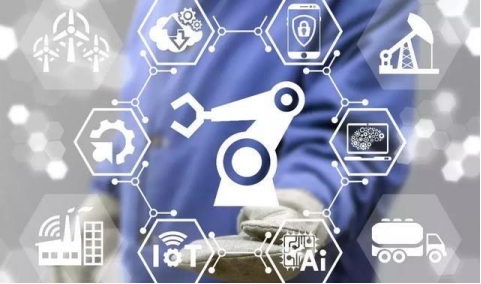
Industrial software is the integration of the experience of enterprises in core processes such as product planning, design, management, and sales into a software system. Essentially, it optimizes the manufacturing process and improves the overall work efficiency through industrial knowledge software. It is the core of intelligent manufacturing.
As the engine of the "digital economy", proposals on industrial software have also become a hot topic of concern at the just concluded Two Sessions:
-On the basis of unified data standards, we aim to cultivate core industrial software enterprises and create an integrated and open architecture industrial software system for comprehensive product optimization and full lifecycle requirements;
——Wang Yongtian, member of the National Committee of the Chinese People's Political Consultative Conference and professor at the School of Optoelectronics, Beijing Institute of Technology
- We need to strengthen top-level design and coordinate the promotion of industrial software localization from a national strategic perspective. ——Xu Xiaolan, member of the CPPCC National Committee and president of China Industrial Internet Research Institute
- At present, the core technology of industrial software in China cannot achieve self-control, and the lack of independent industrial software may lead to the loss of initiative in industrial development. Suggest accelerating the development of industrial software and consolidating the foundation for high-quality development of the manufacturing industry;
——Qian Feng, Chairman of the Jiusan Society in Shanghai and Vice President of East China University of Science and Technology
- Focusing on key core technologies such as industrial software and hardware, industrial operating systems, and high-end equipment, we will leverage the advantages of the new national system and strengthen our research and development efforts through mechanisms such as application traction, overall driving, and leadership. Intensify the application of domestically produced software and hardware, innovate systems such as "insurance compensation+alternative catalog", encourage state-owned assets and key fields to prioritize the deployment of applications, and accelerate the update and iteration of domestic products.
——Zhang Ying, member of the National Committee of the Chinese People's Political Consultative Conference and Deputy Director of the Shanghai Municipal Commission of Economy and Information Technology
- Intensify support for the industrial software industry, establish industry support funds, fully support mature and commercialized software products and enterprises, and provide tax incentives.
——Mo Changying, member of the Standing Committee of the National Committee of the Chinese People's Political Consultative Conference and Chairman of the Guangxi Zhuang Autonomous Region Federation of Industry and Commerce
The industrial software system is divided into three blocks: industrial design software, industrial control software, and industrial management software. These three blocks are not only upstream and downstream relationships in the field of digital transformation, but also a symbiotic closed-loop relationship. The development of the three blocks promotes and constrains each other.
The biggest problem encountered in the fields of industrial design software and industrial control software is being "choked" by people, while the field of industrial management software is currently engaged in an "arms race".
Industrial management software integrates big data, artificial intelligence, and industrial scenarios, and has evolved from management informatization in the past to an important lever for the transformation of manufacturing to service-oriented, forming a certain competitive advantage. This is also a magic weapon for domestic manufacturing to achieve transformation and leadership.
SIE, a domestic industrial management software practitioner, has been focusing on and serving key industry fields for 16 years, especially the early consultation and late solution provision and application implementation of digitalization in industrial manufacturing. During this process, rich digital experience in application scenarios is accumulated and precipitated. At the same time, through "imitation before innovation", we have independently developed a complete set of industrial management software, such as SRM (Supplier Relationship Management), Production Planning and Scheduling (SAPS), Manufacturing Process Management (SMES), Warehouse Management (SWMS), Quality Management (SQMS), Equipment Operation Management (SEDO), Equipment Integration (SMDC), Production Digital Intelligent Operation (SMI) and other core industrial management software required for manufacturing management.
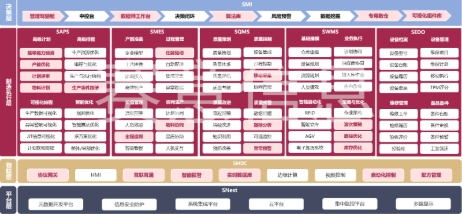
The industrial management software products of SIE are highly integrated, have a natural "localization" attribute, and can be customized according to the actual application needs of enterprises. It has very strong scalability, and is highly consistent with the actual production scenarios of local enterprises. It has become a "localization" industrial management software recognized by the industry with "high quality and beautiful price". It has been applied in the top and middle customers in China and has been recognized and praised.
At the same time, according to the industry attributes of customer enterprises, SIE Information has developed industrial management software packages with industry-specific performance for key industries such as the communication electronics industry, PCB semiconductor industry, and pan home furnishing industry, forming a business model of "standard platform+industry package+configuration services".